Separate a system pressure concern from a pump conclusion
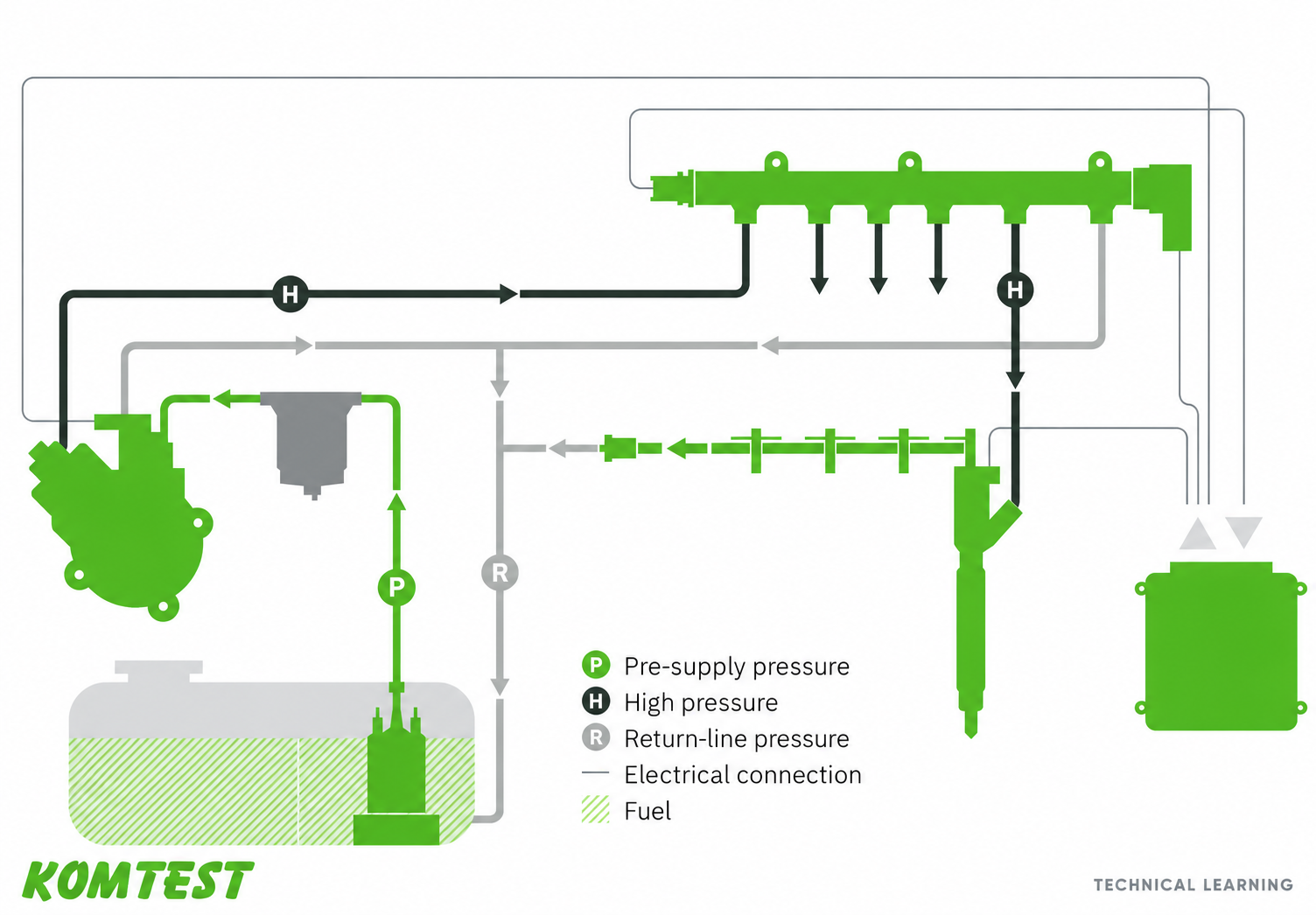
The high-pressure pump supplies fuel to the rail, but rail pressure results from the behaviour of the connected system. Pump delivery enters the hydraulic volume while injection, control discharge and other return paths can remove fuel. The measured pressure also depends on the validity of the sensor information and the response of the control arrangement. A deviation from requested pressure is therefore a starting point for investigation, not a complete description of its cause.
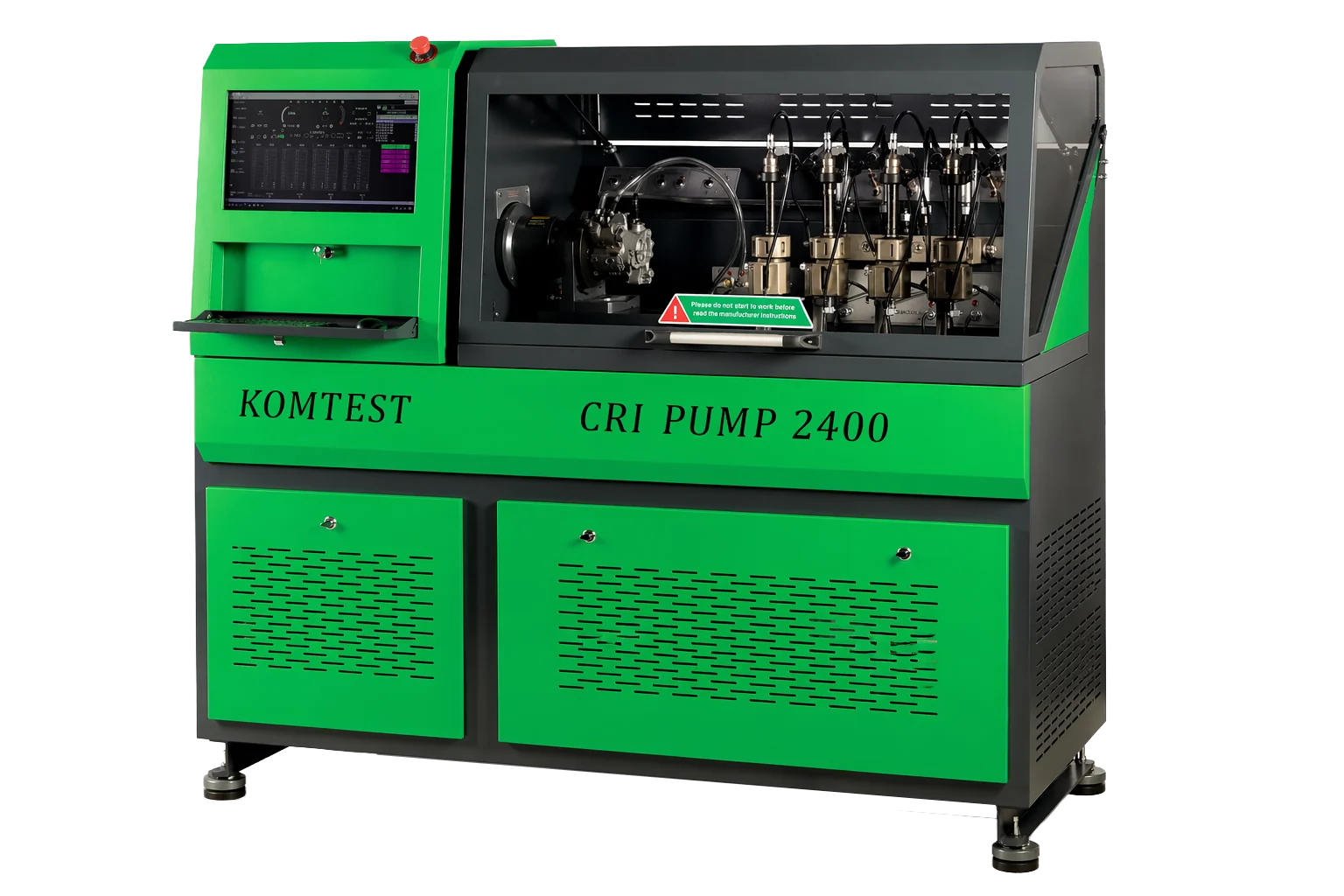
A vehicle assessment can examine the supply circuit, commanded and measured conditions, electrical installation and the behaviour of connected components. An off-vehicle pump test asks a narrower question: how does this identified pump perform when the test system provides specified inputs and loads? Isolating the component can make that behaviour easier to assess, but the resulting report still has a defined scope.
Passing a pump test does not prove the whole vehicle system is sound. A failure needs interpretation against the setup and method before deciding what work is justified.
Define the pump and its test conditions first
Start with the complete pump reference, relevant configuration and applicable test plan. A family name alone may cover variants with different control devices, connections or operating requirements. The correct drive arrangement, specified direction, fluid supply and hydraulic load must match the identified application. A fixture that can physically attach to a pump does not, by itself, establish test compatibility.
Test-fluid condition and temperature, inlet conditions, drive speed and the method of collecting delivery or return flow influence what the result represents. Some pump designs also need a specified lubricating-oil supply; others use a different lubrication arrangement. These requirements must be established for the pump rather than transferred from a visually similar model.
Conditions must be sufficiently stable for the measurement. Changes during conditioning matter. Recording the method and conditions lets later comparisons distinguish component changes from changes in how it was tested.
Transfer supply, delivery and pressure answer different questions
The low-pressure circuit provides fuel to the high-pressure pumping elements. Depending on the design, a transfer stage may be integrated in the pump or provided elsewhere. A transfer-related test evaluates the relevant supply function under its defined conditions. It should not be confused with measurement of the pump's high-pressure output.
High-pressure delivery concerns the amount of fuel supplied under a specified load and operating state. Pressure describes the hydraulic condition against which the pump works. A pump reaching a pressure at one low-demand point has not automatically demonstrated sufficient delivery at a different demand. Conversely, a flow figure obtained at one pressure cannot be treated as available across every pressure and speed.
A useful test plan therefore selects operating points that answer the intended performance question. Starting-related, pressure, control and performance routines can examine different aspects, but their names are not universal definitions. The prescribed inputs, measurements and limits explain what each routine actually evaluates.
| Observation | Question it can help answer | Context still required |
|---|---|---|
| Transfer or inlet conditions | Is the intended supply function established? | Integrated or external supply arrangement and applicable limits |
| Delivery at a specified load | What quantity does the pump supply at this operating point? | Speed, pressure, control command, fluid and measurement basis |
| Pressure behaviour | How does pressure develop or respond in the test circuit? | Hydraulic load, sensor information and control strategy |
| Return or case flow | What fluid leaves the defined return path? | Circuit design, temperature and the applicable evaluation method |
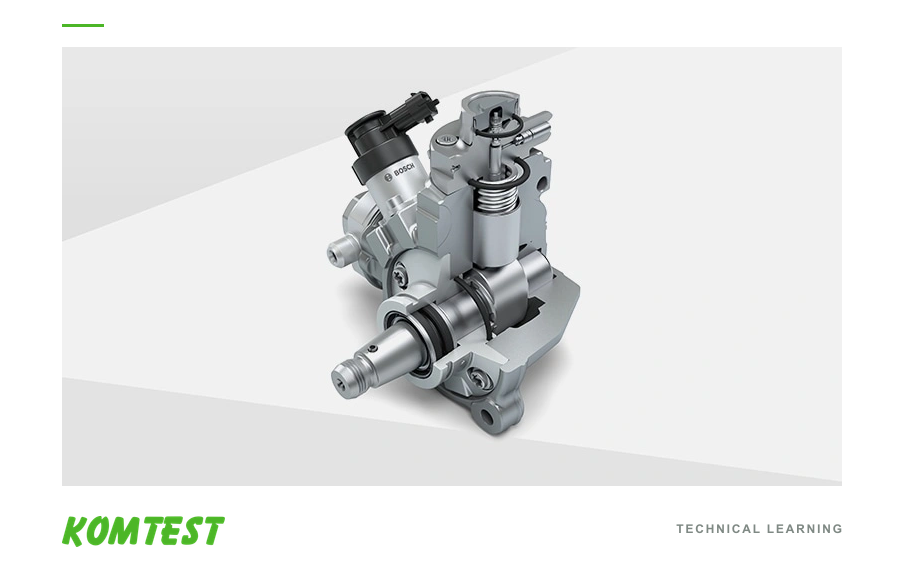
A cutaway view of a CP4-type high-pressure pump. This example shows one construction; internal arrangements and test connections vary between pump designs.
Open the full-size image (new tab)Interpret metering and pressure-control behaviour by design
Many systems regulate the quantity admitted to the pumping process through an inlet metering device. Other control functions may regulate pressure through a discharge path, and some arrangements combine strategies. A metering valve, a pressure-control valve and a protective pressure-limiting device must not be treated as though they always have the same job. Their location and function belong to the specific hydraulic design.
A control test can examine the relationship between a specified command and the resulting delivery or pressure behaviour. The command alone is insufficient: the appropriate electrical drive and hydraulic conditions are part of the method. A displayed percentage does not have a universal meaning across different valve designs or control systems.
Even the unpowered position is design-dependent. Normally open and normally closed suction-control arrangements exist, so loss of electrical drive cannot be assumed to produce the same delivery response on every pump. That distinction explains why a universal disconnect test or a generic command value is an unreliable substitute for the applicable procedure.
Distinguish intended return flow from excessive leakage
Not every flow returning from a pump is a fault. Depending on the design, fuel may pass through intended lubrication, cooling or control paths before returning. Internal clearances can also produce leakage, and the test arrangement may route particular flows separately or together. The phrase return flow is therefore incomplete unless the measured path is identified.
A distinct case-return measurement is useful only when that route exists and the method defines how to evaluate it. Flow measured downstream of a pressure-control discharge must not automatically be described as leakage through the pumping elements. A protective relief path is another function again; it should not be confused with the normal regulation circuit.
Temperature, imposed pressure and operating state affect the interpretation of the measured return. A value that appears large without context is not proof of wear, and a small value alone is not proof of health. The appropriate conclusion comes from the defined route, operating point, expected behaviour and relevant limits considered together.
Connect measurements to a limited, defensible conclusion
Read the report as an argument supported by evidence. It should identify the pump, test-plan version or method, relevant setup, measured results and the criteria used to evaluate them. Units and the basis of delivery measurement are essential. Where results are close to an acceptance limit, the method's treatment of measurement uncertainty and decision-making also matters; rounding a displayed number is not a substitute.
If a test point is outside its permitted range, ask whether the evidence distinguishes a supply condition, a control issue, an internal hydraulic issue or an unsuitable setup. A single result may not isolate those possibilities. Further evaluation should follow the approved method, not an assumed universal relationship between one symptom and one damaged part.
After any permitted repair or adjustment, the relevant evaluation must describe the resulting pump. Any vehicle-side registration, learning or adaptation requirement remains application-specific. A responsible conclusion states what was tested, what met or failed the stated criteria and what remains outside the test's scope. That provides useful evidence without claiming that a bench report alone proves the complete engine diagnosis.
KOMTEST Technical Learning
Key takeaways
- Pressure and delivery are related measurements, not interchangeable proof of pump condition.
- Evaluate control response and return paths according to the identified pump design.
- A useful report connects conditions, results and criteria while stating its limits.
Questions & answers
A closer look.
Does low rail pressure prove the high-pressure pump is faulty?
No. Rail pressure reflects the connected system, including supply, control, demand and return paths as well as measurement information. The applicable diagnostic process must distinguish those influences.
Is all return fuel unwanted leakage?
No. Intended cooling, lubrication and control flows can form part of the return circuit. The route being measured and the pump's specified method determine how the value should be interpreted.
Can the same valve command be used to compare different pump families?
Not as a universal test. Valve design, default position, electrical drive and hydraulic arrangement can differ. Comparable conclusions require the appropriate component-specific conditions and method.
Technical glossary
- Transfer supply
- The low-pressure fuel supply serving the high-pressure pumping function, arranged according to the system design.
- Delivery
- The amount of fluid supplied by the pump on a stated measurement basis and at a defined operating point.
- Inlet metering
- Control of the quantity admitted to the pumping process.
- Hydraulic load
- The connected hydraulic conditions against which the pump supplies fluid during a test.